

You might notice your vision looks a little blurry one week and sharper the next. Many people with diabetes assume this means they need a new glasses prescription. Often, the real cause is blood sugar. When glucose levels rise and fall, fluid shifts in and out of the eye’s lens, temporarily changing how it focuses light.
Fluctuating focus is only one way diabetes affects the eyes. Over time, high blood sugar can damage the retina, cloud the lens, and raise your risk for glaucoma, often without any early warning signs. Keep reading to learn more about how diabetes affects the eyes and what you can do to protect your vision.
How Diabetes Affects the Eyes Over Time
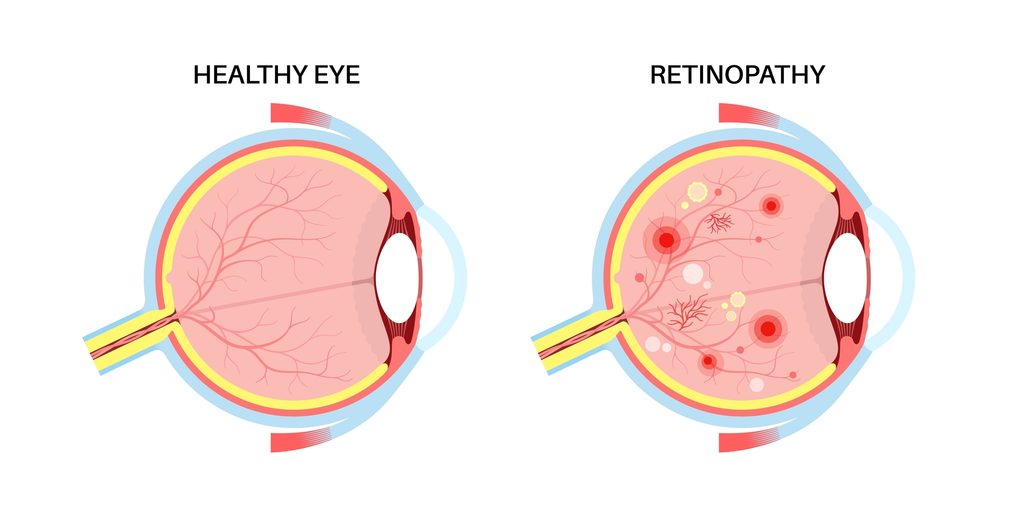
Diabetes affects the eyes mainly by damaging blood vessels. The retina is the light-sensitive tissue lining the back of the eye, and it depends on a network of tiny blood vessels to stay healthy. Persistently high blood sugar weakens these vessel walls, causing them to swell, leak, or close off.
High blood sugar also changes the eye’s natural lens, which can lead to blurry vision and earlier cataracts. Your risk increases the longer you have diabetes, whether you have type 1, type 2, or gestational diabetes. High blood pressure, high cholesterol, and smoking raise that risk even further.
Many of these changes begin before you notice any symptoms. For that reason, diabetic eye care focuses on finding problems early, when treatment works best.
Diabetic Retinopathy and Macular Edema
Diabetic retinopathy is damage to the retina’s blood vessels caused by high blood sugar. It is the leading cause of blindness in working-age adults and usually affects both eyes. Many people with early diabetic eye disease have no idea anything is wrong because their vision still seems normal.
In the early, nonproliferative stage, weakened blood vessels bulge and form tiny pouches. These pouches can leak fluid into the macula, the small central area of the retina responsible for sharp, detailed vision. The resulting swelling is called diabetic macular edema, the most common cause of vision loss in people with diabetic retinopathy. About half of people with diabetic retinopathy will develop it.
In the advanced, proliferative stage, the retina starts growing new blood vessels. These vessels are fragile and bleed easily. A small bleed may show up as a few dark spots floating across your vision, while a larger one can block your sight entirely. Scar tissue from these vessels can also pull on the retina and cause detachment.
Treatment can slow or stop the damage and prevent blindness in most people. Anti-VEGF injections reduce leaking and limit abnormal blood vessel growth. Vitrectomy is a surgery that removes blood or scar tissue from the gel inside the eye, and laser treatment can seal leaking vessels.
Why Cataracts Develop Earlier With Diabetes

A cataract clouds the eye’s natural lens. Everyone’s lens becomes cloudier with age, but people with diabetes tend to develop cataracts at a younger age and see them progress faster. High blood sugar causes deposits to build up in the lens, scattering light and making vision hazy or dim.
In the early stages, brighter lighting at home and anti-glare sunglasses outdoors can help. Once cataracts start interfering with driving, reading, or other daily tasks, surgery is the only effective treatment. Clewner & Kelly Eye Center offers advanced laser cataract surgery, and keeping your blood sugar well controlled beforehand supports smoother healing.
The Connection Between Diabetes and Glaucoma
Glaucoma is a group of eye diseases that damage the optic nerve, usually because of elevated pressure inside the eye. People with diabetes are twice as likely to develop open-angle glaucoma, the most common type. Open-angle glaucoma causes no pain, and vision loss begins at the edges of your sight, so most people don’t notice it early on.
Diabetes can also cause neovascular glaucoma. In this condition, abnormal blood vessels linked to diabetic retinopathy grow on the iris (the colored part of the eye) and block fluid drainage, which raises eye pressure. Vision lost to glaucoma cannot be restored. Eye drops, laser procedures, and surgery can help prevent it from worsening.
Dry Eye and Fluctuating Vision
Diabetes can reduce corneal sensation and affect tear production, making dry eye more common in people with diabetes. Symptoms include burning, grittiness, and vision that blurs and clears as you blink. Temporary blurriness can also follow large swings in blood sugar, and it usually settles once your levels stabilize.
Vision Changes That Need Prompt Attention
Contact your eye doctor right away if you notice sudden changes such as:
- New spots, specks, or dark shapes in your vision
- Flashes of light
- Blurred or distorted vision, including straight lines that look wavy
- Dark or empty areas in your field of view
- Trouble seeing colors or reading fine print
A sudden increase in floaters and flashes can signal bleeding inside the eye or a retinal tear, and both need same-day evaluation.
How Often You Need a Diabetic Eye Exam
Most people with diabetes need a dilated eye exam at least once a year. If you’ve been diagnosed with type 2 diabetes, book your first exam right away, since the condition may have been present for years before your diagnosis. People with type 1 diabetes should have their first exam within five years of diagnosis. Women with diabetes who become pregnant may need closer monitoring during pregnancy.
During a dilated eye exam, drops widen your pupils so your ophthalmologist can clearly see the retina, blood vessels, and optic nerve. Your doctor may also measure your eye pressure and take detailed retinal images. If signs of diabetic retinopathy appear, you may need exams more often than once a year.
Protecting Your Vision When You Have Diabetes

Keeping your blood sugar within your target range lowers your risk for every diabetes-related eye problem. Controlling blood pressure and cholesterol helps protect the blood vessels in your retina, and quitting smoking further lowers your risk. Regular physical activity helps with blood sugar control and supports healthy circulation throughout the body, including the eyes.
Diabetes affects the eyes in several ways, but most of these problems can be treated when they’re caught early. Pairing good diabetes management with yearly eye exams gives you the best chance of keeping clear vision for years to come.
Do you have diabetes and want to keep your eyes healthy? Schedule an appointment at Clewner & Kelly Eye Center in Boca Raton, FL.

