Cataract Surgery, Uncategorized

For many people, the decision to schedule a cataract consultation comes after months of visual frustrations. Oncoming headlights that seem too bright. Text that takes a moment too long to come into focus. Colors that look a little flatter than they used to.
If any of that sounds familiar, it may be time to schedule a cataract consultation. Keep reading to learn more about what to expect at your first cataract consultation with Clewner & Kelly Eye Care!
What Happens During a Cataract Evaluation?
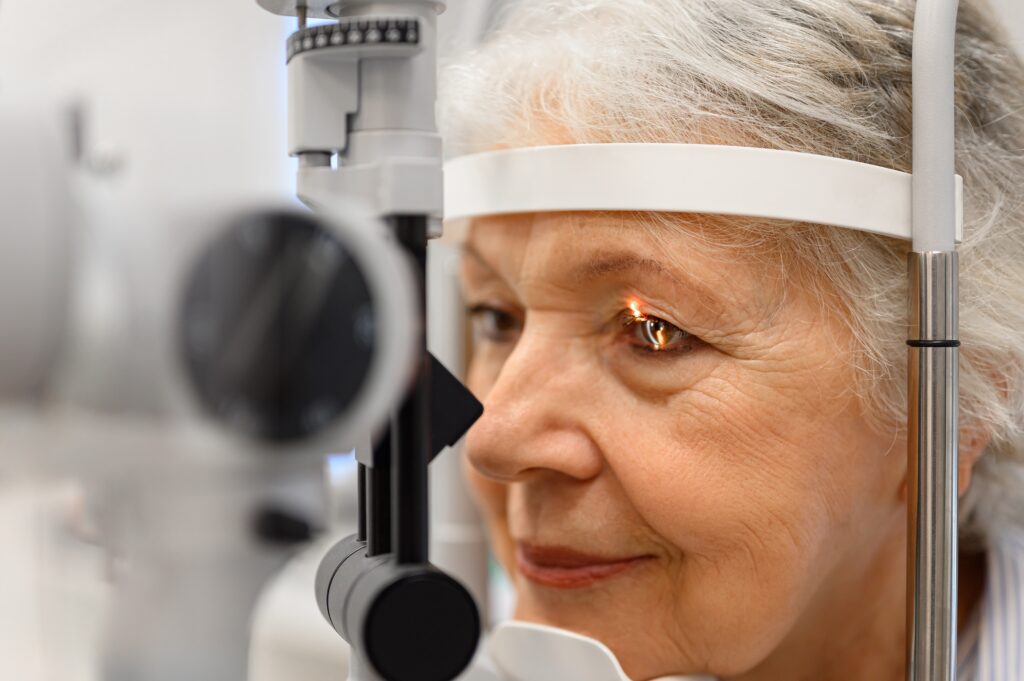
Your cataract consultation starts with a thorough review of your health and medical history, followed by a series of tests designed to give your eye doctor a complete picture of what’s happening with your vision.
The first is a visual acuity test, which uses standard eye charts to measure how clearly you can see at various distances. Each eye is tested separately. From there, your eye doctor will perform a slit-lamp exam, which uses a specialized microscope and bright light to examine the structures of your eye in fine detail.
This is how they can see whether a cataract has formed in your lens and assess the health of the nerves at the back of your eye. You may receive eye drops to dilate your pupils beforehand.
Your intraocular pressure will also be measured to screen for glaucoma, which can sometimes be present alongside cataracts. Finally, you’ll likely fill out a short questionnaire about how your vision affects your daily life. Your answers help your eye doctor understand whether and when surgical intervention makes sense for you.
How Your Eye Doctor Determines If Cataract Surgery Is Right for You
Not every cataract requires immediate treatment. For most patients, cataracts progress gradually and don’t damage other parts of the eye in the process, so there’s generally no urgency to remove them until they start affecting your quality of life. Your eye doctor will ask about specific activities that have become more difficult, such as reading fine print, driving at night, or watching television comfortably.
If your cataracts aren’t yet interfering with daily function, your eye doctor may recommend monitoring them with periodic follow-up exams rather than proceeding directly to cataract surgery. However, certain conditions can cause cataracts to worsen more quickly.
Patients managing diabetes, high blood pressure, or obesity may see faster progression, and diabetic eye care is often part of the broader conversation at these visits. The good news is that waiting typically doesn’t affect how well vision recovers afterward, so you’ll have plenty of time to make your decision about when to move forward with cataract surgery.
Choosing the Right IOL for Your Vision Goals

One of the most important conversations you’ll have at your first cataract consultation is about intraocular lenses, or IOLs. When your natural lens is removed during surgery, it’s replaced with an artificial lens, and the type you choose has a significant impact on your vision after surgery.
Clewner & Kelly offers a range of premium intraocular lenses that go well beyond basic distance correction. The right lens depends on your lifestyle, your existing refractive errors, and how much you want to rely on glasses after surgery.
Multifocal IOLs, including the PanOptix and ReStor lenses, are designed to provide clear vision at multiple distinct distances. They’re a strong option for patients who want to minimize their dependence on glasses for most activities.
Accommodating IOLs work by mimicking the eye’s natural focusing ability, shifting to maintain clarity at different distances. Extended depth of focus lenses, such as the TECNIS Symfony, provide a broader, more continuous range of vision and tend to perform particularly well in low-light conditions.
For patients with astigmatism, Toric IOLs correct corneal irregularity directly and are available in several types to address both astigmatism and other visual needs. Standard monofocal lenses remain an option, though patients who choose them typically still need glasses for near tasks.
Your eye doctor will take precise measurements of your eye during the consultation and walk you through which lens categories make the most sense given your specific anatomy and goals.
Questions to Ask at Your First Consultation

A good consultation is a two-way conversation, and the more your doctor knows about your priorities, the better the recommendation will be. Ask about recovery expectations and whether your lifestyle would affect the timeline.
Recovery from cataract surgery is generally straightforward, but knowing what to expect makes the process easier. Most patients recover over about four weeks, and it’s common to experience some blurry or distorted vision in the days immediately following the procedure. Light sensitivity and mild dryness or irritation are also normal during the early recovery period.
It’s also worth asking about insurance: standard monofocal lenses are typically covered by Medicare and most health insurance plans, whereas premium IOL upgrades are generally considered elective and may require an out-of-pocket payment.
If dry eye is something you deal with regularly, bring that up early, since it can affect surgical planning and may need to be treated before your procedure.
Ready to find out if cataract surgery is right for you? Schedule an appointment at Clewner & Kelly Eye Center in Boca Raton, FL.